
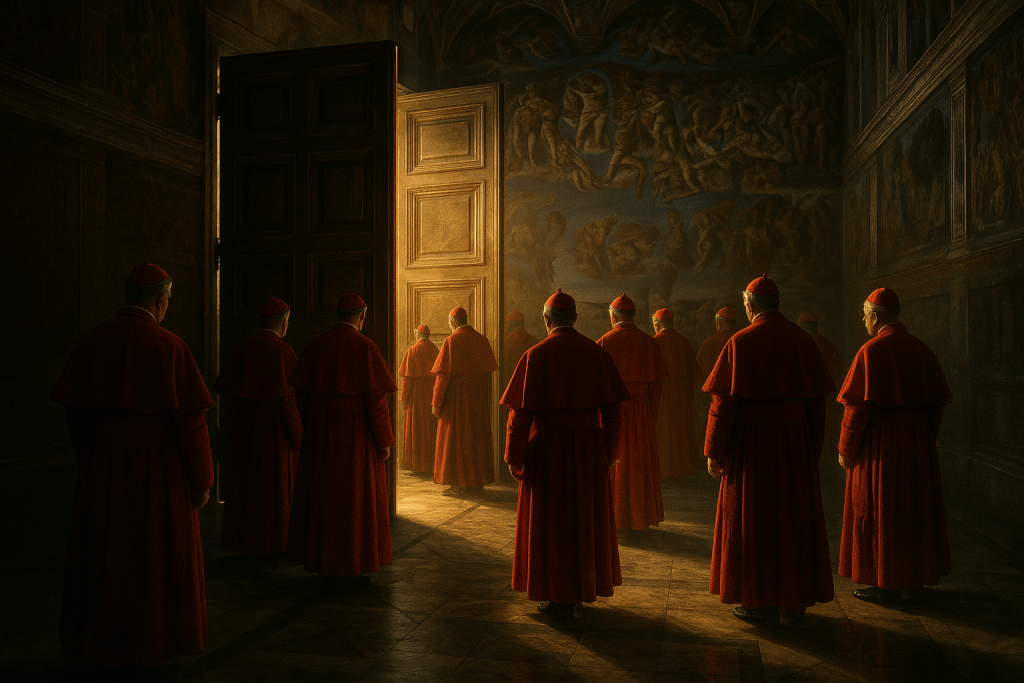
In the age of transparency, live debates, and instant media, there is still one global election that unfolds entirely in silence — hidden behind sealed doors, sacred oaths, and rituals unchanged for centuries. It is known as the Conclave: the solemn, mysterious gathering of cardinals in Vatican City to elect a new Pope.
For travelers, believers, historians, and the simply curious, the Conclave represents not just a religious event — but one of the last great enigmas of the modern world. How did it begin? Why is it still done in secret? And what does it tell us about the legacy of leadership, tradition, and the divine?
What Does “Conclave” Mean?
The word “Conclave” comes from the Latin phrase cum clave, meaning “with a key.” It refers to the fact that, once the election begins, the cardinals are literally locked inside a space — originally in a secure room, today in the Sistine Chapel — and cannot leave until a new pope is elected.
This wasn’t always the case. In fact, the locking of the cardinals only began in the 13th century, after a particularly chaotic papal election changed Church history forever.
From Political Chaos to Sacred Ritual: The Origins
In 1268, following the death of Pope Clement IV, the cardinals gathered in the city of Viterbo to select his successor. But after nearly three years of debate and political maneuvering, still no decision had been reached. Frustrated and desperate, the townspeople took drastic action: they locked the cardinals inside the building and removed the roof to expose them to the elements — rain, cold, and sun.
Within weeks, the new pope was chosen.
This dramatic episode led to the formalization of the Conclave process in 1274, under Pope Gregory X, establishing rules for seclusion, secrecy, and speed — many of which are still followed today.
The Sacred Process: How a Pope Is Chosen
Today, the Conclave begins after the death or resignation of a pope (as occurred in 2013 with Pope Benedict XVI). The College of Cardinals, made up of all cardinals under the age of 80, gathers in Rome and prepares for the election.
Here’s a closer look at what happens:
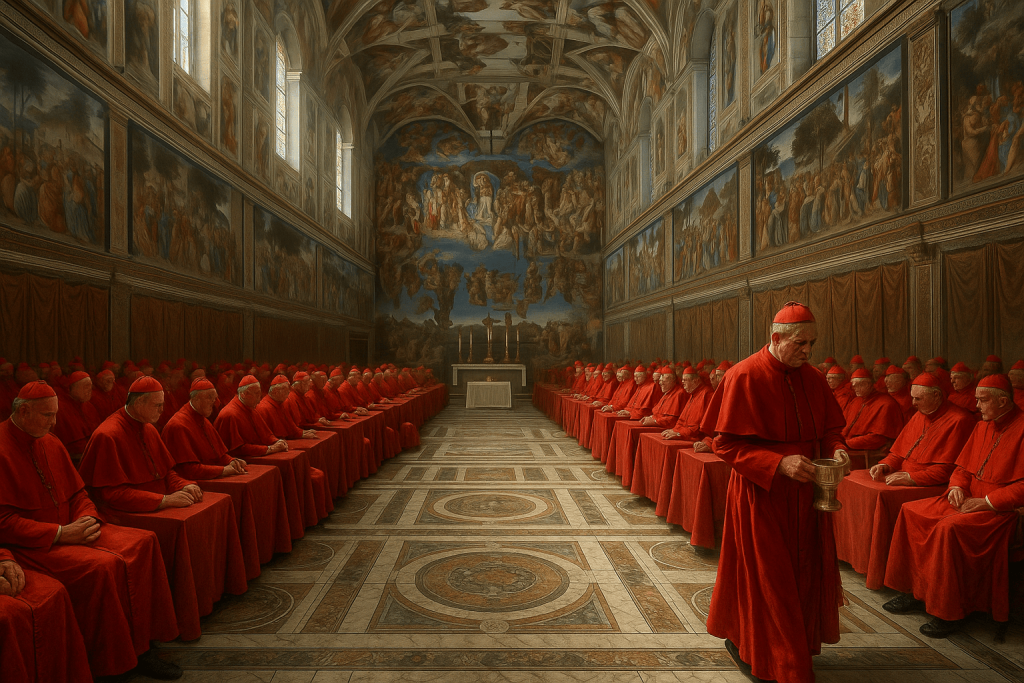
- Location: The cardinals are housed in the Domus Sanctae Marthae, a residence inside Vatican City. When it’s time to vote, they walk in solemn procession to the Sistine Chapel, under the gaze of Michelangelo’s “Last Judgment.”
- Oath of Secrecy: Before voting begins, each cardinal swears a solemn oath of secrecy. Once this is complete, the doors of the chapel are closed and locked — the outside world is completely cut off.
- The Ballots:
- Voting takes place up to four times per day (two in the morning, two in the afternoon).
- Each cardinal writes the name of his chosen candidate on a paper ballot and places it into a chalice on the altar.
- To be elected, a cardinal must receive a two-thirds majority.
- Voting takes place up to four times per day (two in the morning, two in the afternoon).
- The Smoke:
After each round of voting, the ballots are burned in a special stove.- If no pope has been elected, black smoke (fumata nera) rises from the chimney above the Sistine Chapel.
- When a pope has been chosen, white smoke (fumata bianca) announces the decision to the world.
- If no pope has been elected, black smoke (fumata nera) rises from the chimney above the Sistine Chapel.
Symbols of Power, Silence, and Unity
The Conclave is more than a vote — it is a profound act of faith. Every element, from the locked doors to the burning ballots, is designed to emphasize prayer, discernment, and spiritual unity. No speeches. No campaigns. No cameras. Only silence, contemplation, and ancient tradition.
As the world waits outside — often in St. Peter’s Square, eyes fixed on the tiny chimney — the cardinals continue a ritual that dates back nearly eight centuries, selecting a spiritual leader for over 1.3 billion Catholics worldwide.
Coming This Friday: Part 2
What famous Conclaves shaped history? Which papal elections changed the Church forever? And what can modern travelers visit today to experience the magic and mystery for themselves?
Join us Friday for Part 2 of “Inside the Conclave”, where we explore the most dramatic papal elections in history — and reveal how you can walk the same sacred path with Fattori Travel Experiences.
.
To plan your private Vatican itinerary or Jubilee 2025 pilgrimage, contact us at info@fattoritravelexperiences.com