
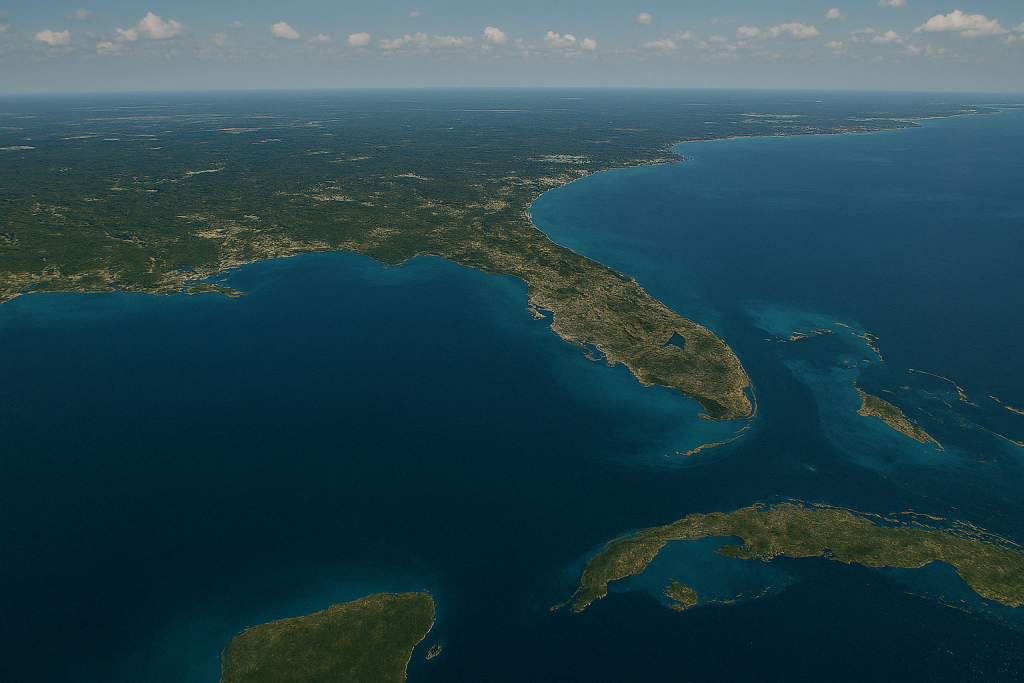
In a bold and controversial move, Florida Governor Ron DeSantis has signed a new piece of legislation officially renaming the “Gulf of Mexico” as the “Gulf of America” — at least within Florida state boundaries.
The new law mandates that all state-run institutions, public schools, and tourism boards update their maps, educational materials, and promotional content to reflect this change. From now on, any reference to the waters that touch Florida’s western shore will, in official state terms, be called the Gulf of America.
A Symbolic Shift or a Political Statement?
Supporters of the move cite patriotic pride and the desire to “reclaim the identity” of the region. Critics, on the other hand, see it as a political gesture with limited geographical credibility.
International observers and geographers have been quick to clarify: the Gulf of Mexico remains the internationally recognized name for the large body of water bordered by the U.S., Mexico, and Cuba. Florida’s internal use of “Gulf of America” is a symbolic rebranding — not a change acknowledged on a global level.
Still, the ripple effect is real.
What Changes for Travelers?
For visitors heading to the Florida coast, this new naming convention might start appearing on state maps, road signs, and tourism brochures. Think:
- “Sunsets on the Gulf of America”
- “Luxury escapes on America’s Gulf coast”
- “Dolphin watching tours on the American blue”
While the waters, beaches, and experiences remain unchanged, the framing of the destination might begin to shift, especially in the hands of creative marketers and local tourism boards.
It also raises an interesting question for the travel world: how do names influence perception? And how much of a traveler’s memory is tied to a label?
Cultural Trends and Destination Identity
This isn’t the first time a place has undergone a branding evolution. We’ve seen cities reclaim old names, regions update their identities, and landmarks renamed for political or cultural reasons. In this case, the move is less about geography and more about Florida asserting a unique voice on the map.
Whether it will stick — or spark broader adoption — remains to be seen.
For now, travelers can expect a blend of both worlds: brochures celebrating the Gulf of America, while GPS systems and weather apps still show the Gulf of Mexico.
A Shift to Watch
Whether symbolic or strategic, this renaming touches on a deeper reality: the power of language in how we explore the world.
Will this become a regional trend? Or remain a Floridian footnote in travel history?
Time, and tides, will tell.