
When we wander through the ruins of Ancient Rome, it is easy to be swept away by their grandeur — soaring aqueducts, sprawling amphitheaters, and majestic temples that have defied the ravages of time. But behind this endurance lies not just Roman engineering genius, but a material science so advanced that even today, researchers are still decoding its secrets. Welcome to the extraordinary world of self-healing Roman concrete — an innovation as timeless as the Empire itself.
In recent years, a team from the Massachusetts Institute of Technology (MIT), led by Professor Admir Masic, uncovered a groundbreaking truth: the concrete used by the Romans wasn’t just durable; it could repair itself. When modern concrete cracks, it often spells the beginning of the end. In contrast, Roman structures have survived centuries of earthquakes, weathering, and human activity — with far fewer interventions than modern constructions demand.
The key? A technique known as “hot mixing.” During production, Roman builders intentionally left fragments of quicklime — tiny, reactive clasts embedded within the concrete. When water entered a fissure, these lime clasts would react, forming new crystals of calcium carbonate that effectively “healed” the cracks from within. Rather than being a flaw, these white flecks were a masterstroke of ancient material engineering.
Imagine a bridge that heals itself after minor tremors, a road that mends its own potholes, or a building facade that withstands centuries with little more than sunlight and rain. The Romans imagined it first. Now, nearly two millennia later, we are finally rediscovering what they knew: true luxury isn’t merely aesthetic grandeur; it is resilience, sustainability, and timeless endurance.
This revelation has already ignited interest among modern architects and sustainability pioneers. Experimental projects are underway to bring Roman-inspired “living concrete” into contemporary design, promising buildings that last not decades, but centuries. The environmental impact could be revolutionary: less concrete production, fewer repairs, and a massive reduction in carbon emissions linked to the construction industry.
At Fattori Travel Experiences, we find this story deeply inspiring. Just as we curate journeys that transcend fleeting tourism and embrace authenticity, so too did Roman builders craft monuments not for a season, but for an eternity. Traveling through Rome, one doesn’t simply visit the past; one walks through a living dialogue between ancient wisdom and modern aspiration.
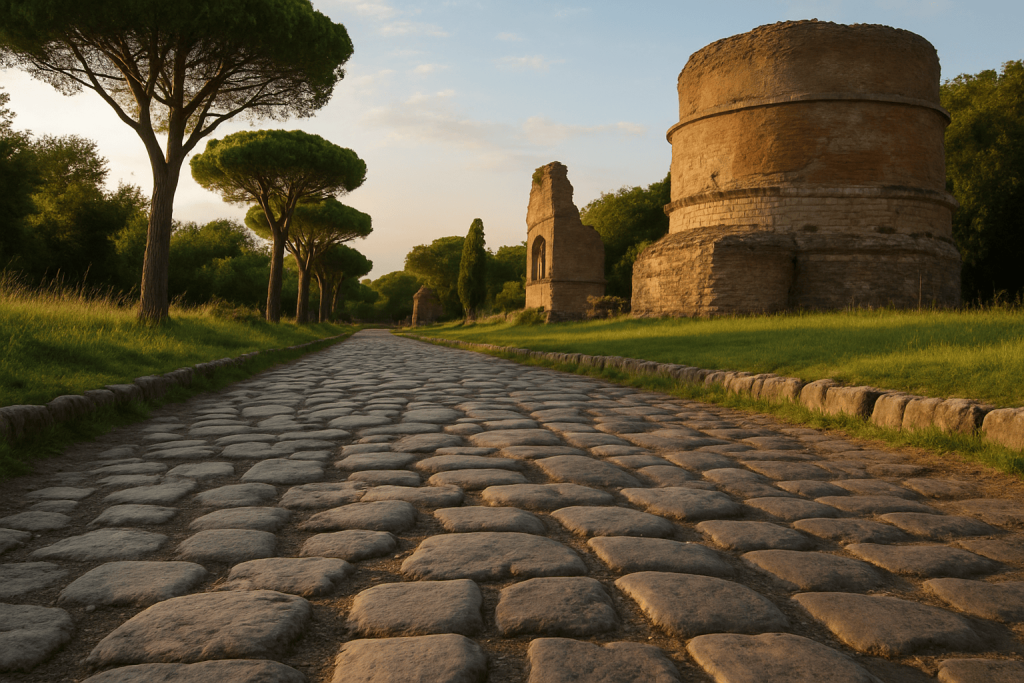
Next time you tread the smooth, worn path of Rome’s Via Appia or stand beneath the timeless vaults of the Pantheon, remember: you are not just witnessing history. You are standing on the shoulders of those who mastered the art of building for the ages.
And in that, there is no greater luxury.